
Time, it is a purposeful thing of linear and circular beauty and beast measuring the existence of life towards decay, death and eventually dust.
As humans, our lives are mainly bound by linear time through aging towards decay and death to dust. Within this single linear time dimension our clocks are set in a cyclic twenty four hour period of activity and rest from which there is no escape until that future time of dust.
Similarly, plants are bound in cyclic and linear time. Seasonal and diurnal cycles are contained within a linear life expectancy. Their spring progression of growth following winter slumber, to rest and recuperate over the harshness of summer, to rejoice in the cooling weeks of autumn as evergreen plants put on late growth spurts and in some cases flower.
Deciduous plants soak up declining sun energy to absorb and store down into the root structures while being patient in their reactive knowledge that warming soils in months to come will release that energy from their crib of hibernation.
Yes plants age, with their existence predominately being a cycle of growth, rest, growth, sleep, growth, rest, growth, sleep and on within linear time until as with humans that time leads to decay and dust.
Time spent with the plants in my father’s back yard has realised different paths of time determined by various plants. For some time is rapid, others laid back and for some time is a path that only the plant defines.
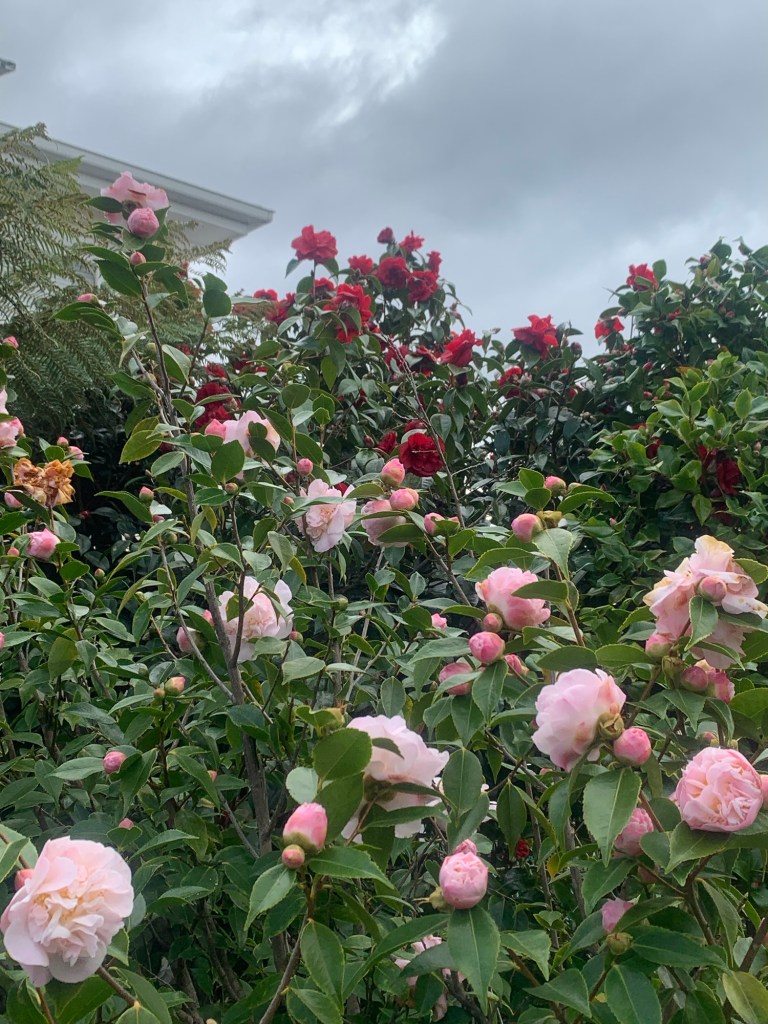
Towards the end of winter Camellias start forming flower buds, they fatten, open and become spent flowers within a two month period. It is a blaze of glory that is predictable as a clock that can be marked on the annual calendar plus or minus a week or two depending on winter severity.
Bulbs like Daffodils (Narcissus spp.) that have hibernated for many months pop up shoots starting just after mid winter. The green grass like stems grow vigorously matching the increasing nurturing warmth of the sun heading towards spring. Flowers take little time to form with much flowering taking place in a short period of a month to six weeks.
By the time summer arrives the leaves have turned brown, with plant energy dragged back down to the bulbs in the cool dirt below. The Daffodil hibernates once more. As with the Camellias, Daffodils are predictable in their response to the cycle of seasons and the progression of time.
Predictability is not a description that applies to the Tasmanian Laurel (Anopterus glandulosus) that resides in a tub in our backyard. A uniquely Tasmanian rainforest plant it may live well past 100 years and can grow to a large shrub/small tree to six metres. Give it some shade from harsh mid afternoon sun and it does quite well in a suburban garden.
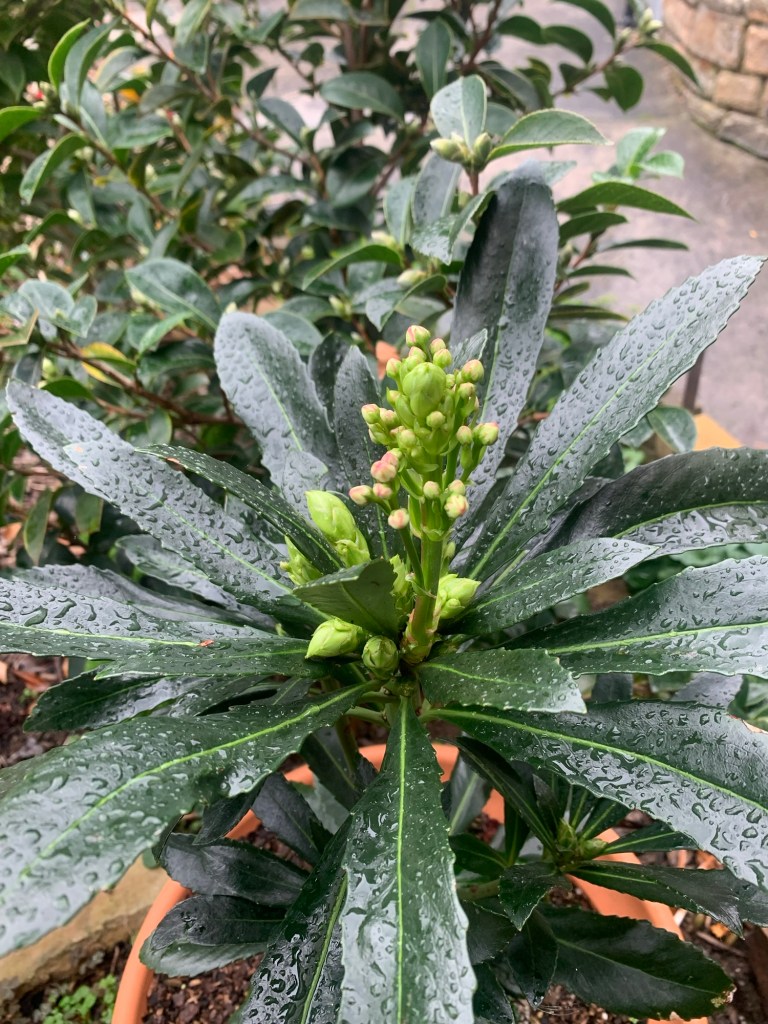
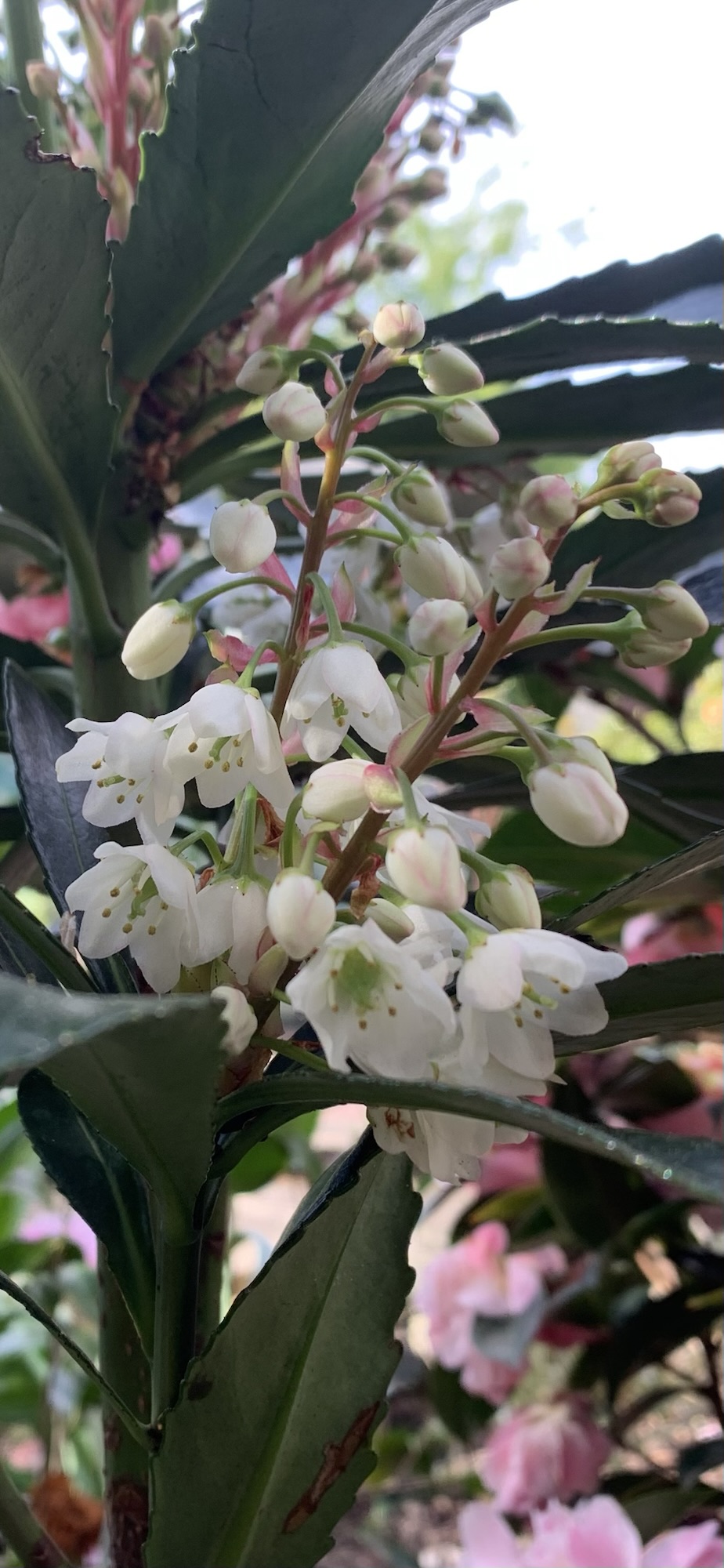
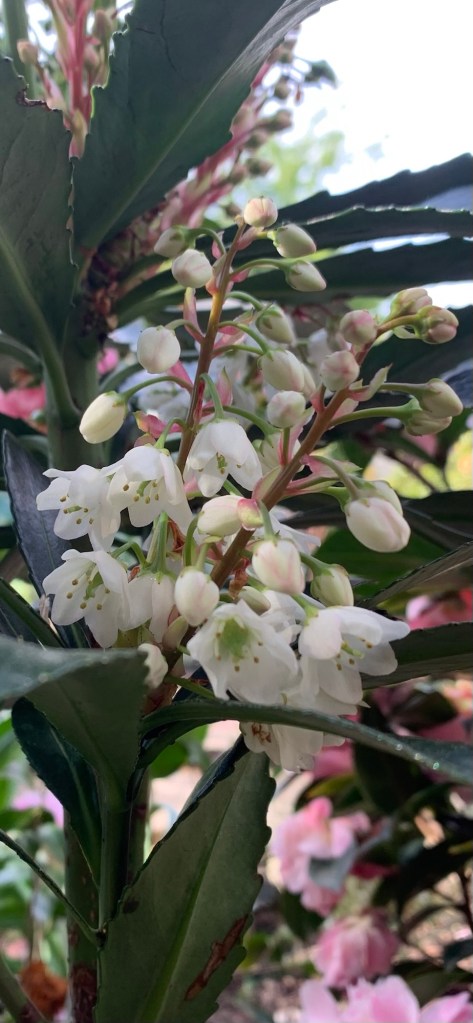
In July 2025 I bought a small one (125mm pot), placed it into a reasonably sized tub in a semi-shaded position and enjoyed watching the slightly serrated deep glossy green leaves grow with the plant heading upwards at a reasonable rate. In late January this year I noted what initially appeared to be a new set of leaves appearing at it’s pinnacle and to realise two weeks later that these were flowers starting to form.
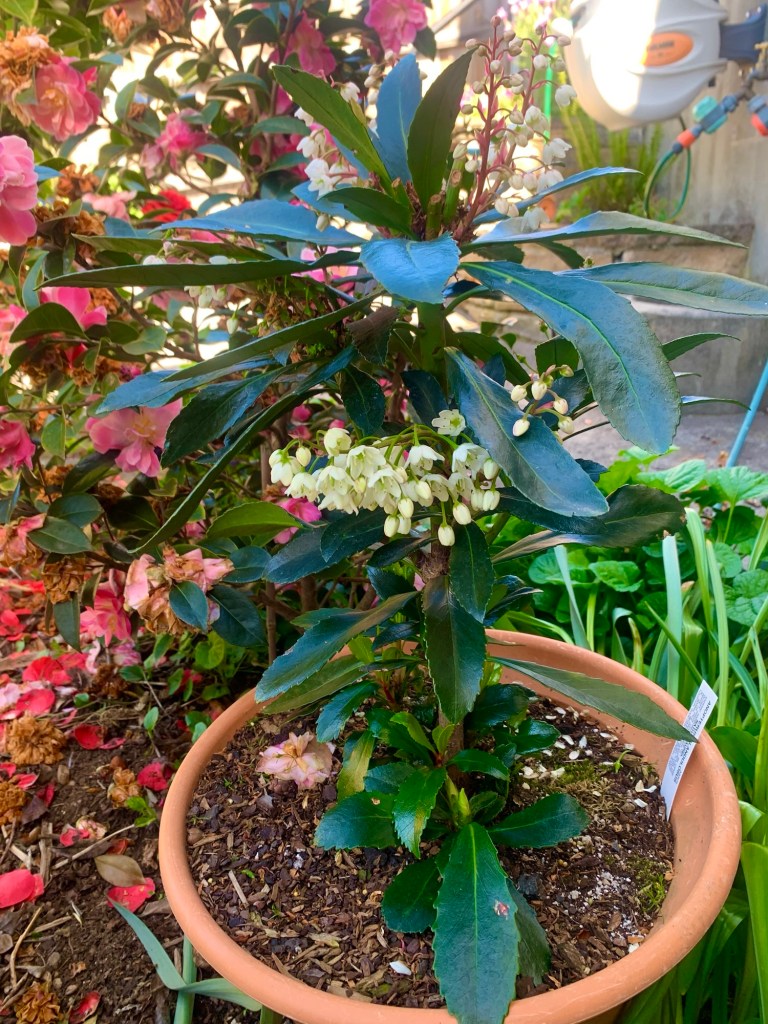
Astonishing it was to view a Laurel so young preparing to flower. Little did I know at the time what an evolving process it would become. What started as one shoot multiplied over the next four months becoming eight, all resembling asparagus shoots. Each developing many small white bell shaped flowers.
Three different Honeyeaters that had not been seen in the garden for a long time somehow found their way to feast at regular times on the nectar within the many flowers. The garden’s resident wattle birds flew into the feasting action as well.
Here we are now in the middle of October some nine months later and the plant is still giving up more flowers.
Time is lazy for the Laurel flowers, meandering towards an as yet undisclosed and unforeseeable conclusion. It ignores our human fixation on the months, days, hours, minutes and seconds almost mocking the need to have time measured at all. Flowering will be done when it is done no matter how we define the passing of time and the seasons.
Is there a parable to proclaim from this?
Perhaps it rests in reflecting on how we define our existence of marking life to the year, month, day, hour, minute and seconds. Our waking moments can be consumed in thinking back to before, during the now and towards the future.
How much does the structure of our existence needs to be defined by fixed progression of time? Perhaps it is easy for me to question as I am now retired from a formal work existence which was always strictly measured by the clock.
Maybe I am jealous of the Laurel’s time flippancy and maybe we all should be jealous as there is freedom in its existence that is intangible and unreachable for humans bound by the tick tock clock of our existence. All this questioning and musing brought about by a plant that currently stands at 450mm (18 inches) high!!
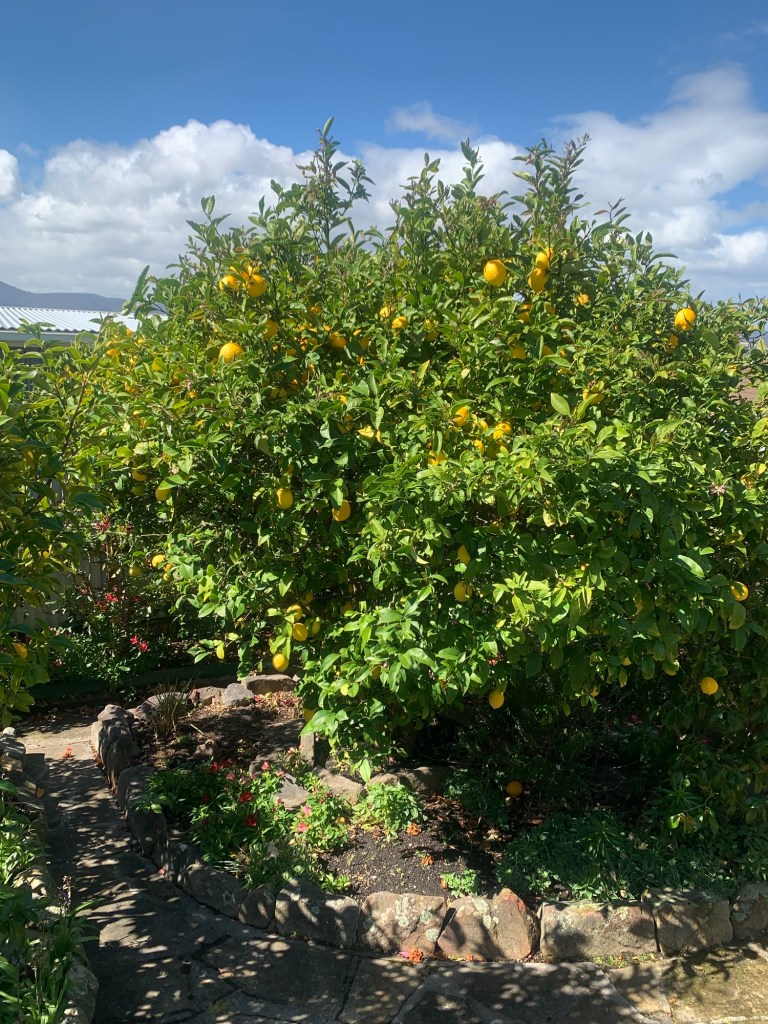
Now, what to write about the thirty year old crazy Lemon tree towards the back corner of the yard that flowers and produces fruit 365 days a year like a perpetual lemon making machine mocking all seasonal cycles? Time? It cares not. I better make sure I write about that before linear time demands I decay to death and eventual dust.